
Selecting the right foundation is one of the first major decisions when building a geodesic dome—and one that shapes comfort, longevity, and overall performance. Climate and terrain largely determine which option makes sense. Whether you’re building on stable soil, a rocky hillside, or wet marshland, the right foundation provides a stable, dry, and durable base for your dome.
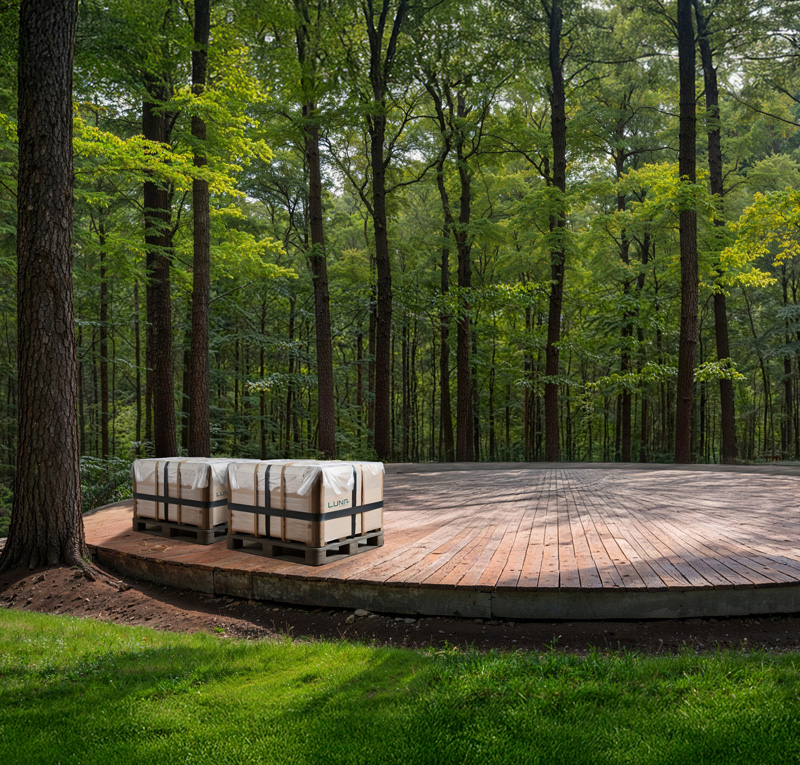
Uninsulated wood platforms are popular because they’re fast to build, cost-effective, and require fewer specialized tools than concrete. They’re also easier to transport to remote sites, since lumber can be moved in smaller loads and carried by hand where heavy equipment can’t go.
Elevated builds on posts or stilts work especially well on uneven ground or marshy terrain where moisture is a concern. Maintenance typically involves periodic inspections for rot or insect activity, though pressure-treated lumber greatly increases longevity.
For seasonal or mild climates, this simple structure offers excellent value and flexibility.
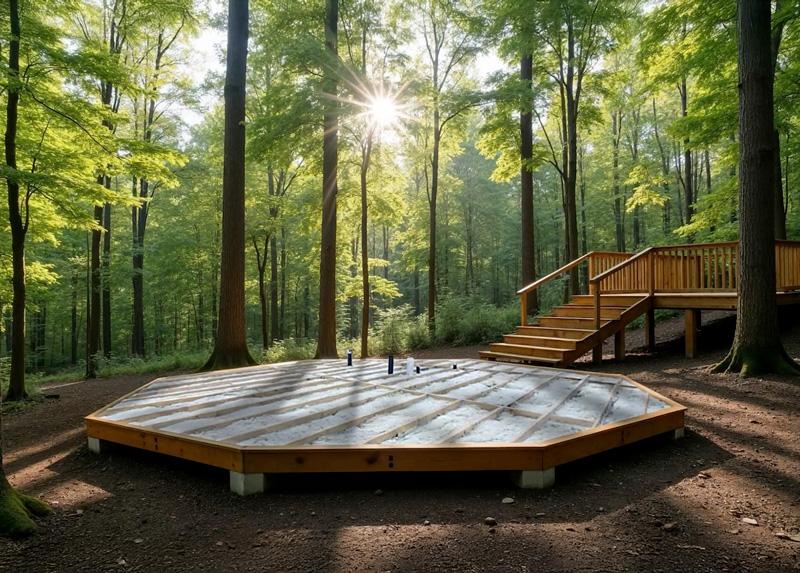
Insulated wood foundations take the same practical platform structure and add batt or foam insulation between the joists to improve comfort in colder weather. This option remains easier to transport and assemble in hard-to-reach locations compared to concrete, making it a strong choice for off-grid or wilderness builds.
When properly sealed with a vapour barrier, an insulated wood floor retains warmth surprisingly well and significantly reduces heating demands. Costs can vary based on the type and thickness of insulation, but overall remain lower than heated concrete systems.
Many dome owners also appreciate the natural aesthetic and warmer “feel” of a wood floor system.
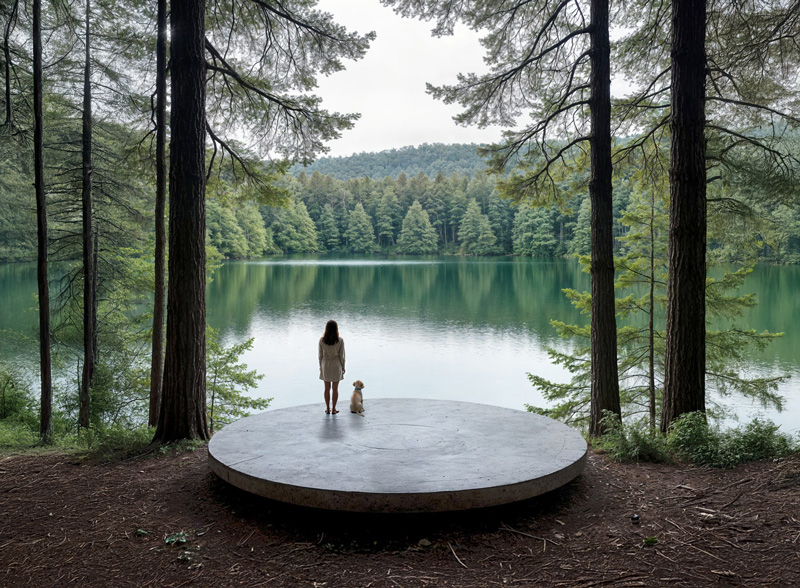
A concrete slab offers unmatched durability and extremely low maintenance, making it ideal for long-term use on flat, compacted terrain.
While concrete requires heavy equipment and is difficult to transport into remote areas, its lifespan and stability often justify the effort for accessible building sites. Slabs can support a wide range of interior finishes—from polished concrete to hardwood to tile—offering strong design flexibility.
For moderate climates or three-season domes, a simple unheated slab is often more than sufficient. Once poured, the foundation requires little upkeep beyond basic moisture management and occasional sealing.
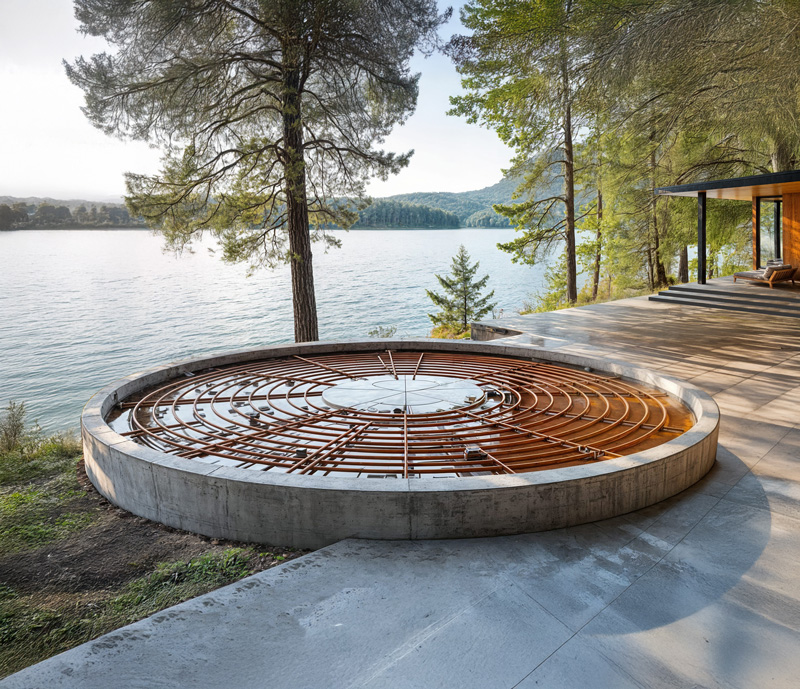
A heated concrete slab adds radiant warmth underfoot, creating one of the most comfortable and energy-efficient floor systems available for cold climates.
These systems can be powered by a traditional boiler or a geothermal loop, with open-loop geothermal using water and closed-loop systems using glycol.
Installation requires careful planning, insulation, and a proper vapour barrier to ensure the heat stays inside the dome rather than escaping into the ground. While heated slabs cost more and take longer to install, the long-term energy savings and even heat distribution make them a premium option.
Many dome owners also value the clean, uncluttered interior aesthetic that comes from eliminating baseboard heaters and ductwork.
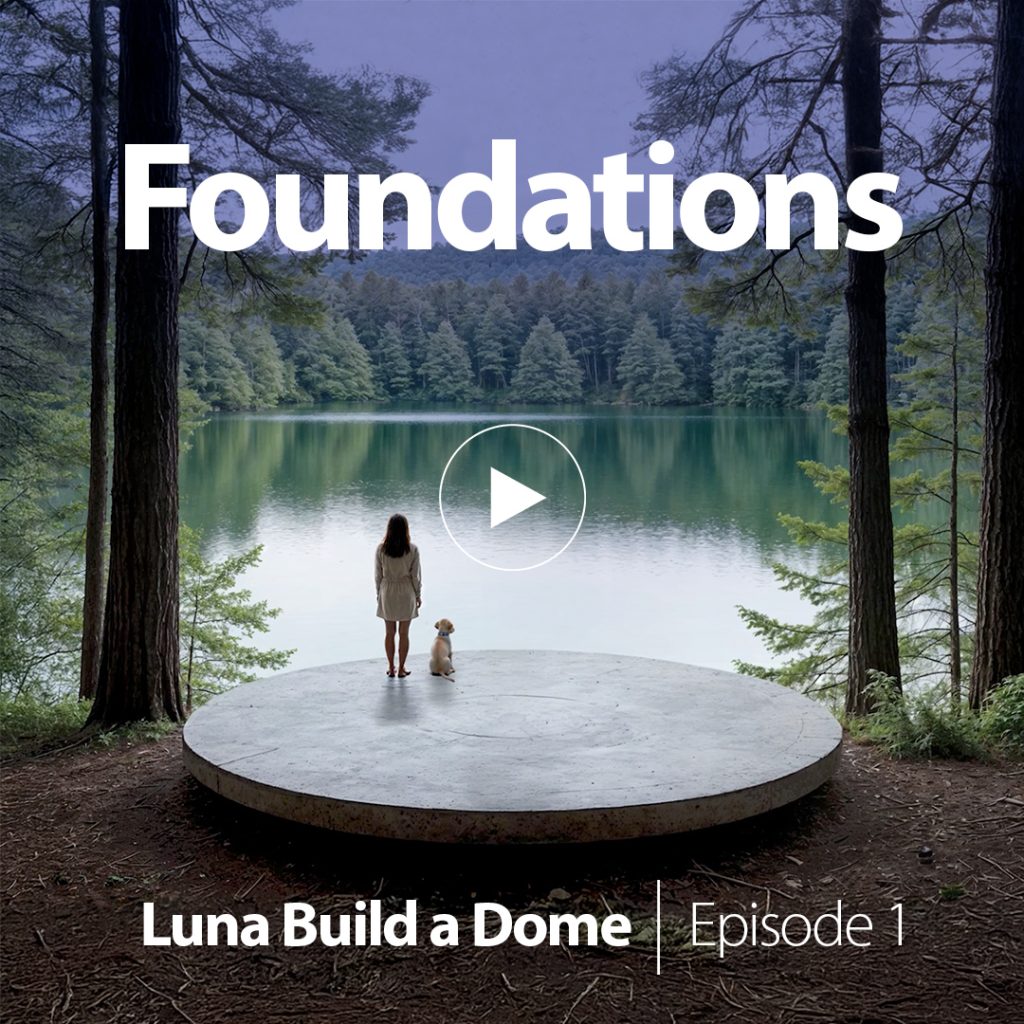
Our first episode, Foundations, is the launch of a series that will cover all the primary options you will consider for a geodesic dome construction – from the ground up. Each segment will cover one of the main components of the build. Foundations is followed by The Framework and episode 3, Exterior Covers will follow that. From there we will look at your window and door options, heating, cooling, curtains for your huge panorama window, flooring and more.
Tyson Vinek is the Founder and CEO of Luna Glamping, a trusted manufacturer & provider of premium geodesic domes and luxury glamping structures for resorts and outdoor hospitality businesses across the USA & Canada. Since 2015, he has gained hands-on experience in product development, quality control, and customer support, helping entrepreneurs & businesses launch reliable and profitable glamping operations. Tyson is committed to delivering durable, weather-resistant solutions backed by proven industry knowledge and dependable service.

No configuration required.